
Thank you for Subscribing to Hospitality Business Review Weekly Brief


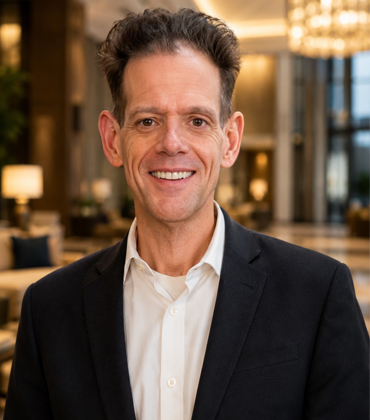 Scott Nadel, Founder and CEO
A hotel does not succeed or fail at the front desk. By the time the first guest checks in, most of the outcome has already been set in motion through earlier decisions, like how rooms are priced, how demand is forecast, how many people are scheduled on shift and what level of service those teams are expected to deliver.
The problem is that these decisions are often made in isolation during development. Pricing is built on assumptions that do not fully reflect live demand. Staffing models look efficient on paper but strain under real occupancy levels. Service standards are defined without accounting for the pace and variability of daily operations. Once the hotel opens, these gaps show up quickly. Teams start adjusting in real time, and what was meant to be a structured operating model turns into a series of reactive fixes that affect both guest experience and revenue consistency.
Universal Hospitality Solutions (UHS) works at that exact fault line between planning and execution.
Instead of treating pre-opening strategy and operations as separate phases, it connects them. The firm aligns pricing with realistic demand behavior, builds forecasts that guide daily decisions rather than relying on static projections, and structures staffing around actual service delivery requirements. The end-to-end approach makes the property function as a stable, revenue-generating asset from day one.
“For us, hospitality performance is not defined by occupancy alone. It is measured by whether a hotel can sustain revenue, maintain service consistency and generate repeat guest demand once initial momentum fades,” says Scott Nadel, founder and CEO. “We look at both the personal origins of a hotel and the commercial logic behind it.”
That view is shaped by Nadel’s decision to carry forward his grandfather’s experiential understanding of how hotels succeed. It is built on old-school values, with people at the center of how a hotel operates and supported by market intelligence and operational oversight that ensure each conviction can be turned into a repeatable business system.
Building a Hospitality Brand for Service Consistency
Maintaining consistent service across shifts, seasons and demand cycles is one of the hardest parts of running a hotel.
For us, hospitality performance is not defined by occupancy alone. It is measured by whether a hotel can sustain revenue, maintain service consistency and generate repeat guest demand once initial momentum fades.
The challenge becomes most apparent when key decisions are made in isolation. Forecasting, staffing and pricing may be defined during development, but without being structured around how the hotel will operate, those decisions start to break down once demand fluctuates and service has to be delivered in real time.
UHS addresses this by structuring these decisions around actual operating conditions from the outset. Forecasting models are developed early so revenue expectations are realistic and actionable. Staffing is mapped against real service demand, ensuring teams are neither stretched during peak periods nor underutilized during slower cycles. Revenue strategies are aligned with market conditions and owner expectations so pricing supports both demand and long-term positioning, while maintaining the level of service required to deliver a consistent guest experience.
This integrated approach is supported by more than 40 years of combined partner experience across hotel development and property management, giving UHS a practical understanding of how early decisions influence long-term outcomes.
That same discipline continues after opening. Market awareness becomes structured and proactive. Forecasting is used to guide decisions, and not just to report outcomes. Sales teams move from order-taking to proactive revenue building, shaping demand while maintaining the service consistency that drives repeat guest stays.
People-First as Operating Logic
Better-supported associates deliver more consistent service, and that consistency leads to repeat guest stays. Over time, repeat stays strengthen long-term asset performance and revenue stability, making associate support a measurable driver of outcomes.
Personnel training at UHS is structured around that objective.
It focuses not only on service standards, but also on growth, well-being and the ability to deliver consistent hospitality across different brands and market conditions. This reduces variation in service quality, even when teams change or operational pressure increases.
 It reinforces this through clearly defined service behaviors. Practices such as the 10/5 principle create consistency in how associates engage with guests, while local hiring ensures teams understand the communities they serve. Together, these decisions improve both guest connection and market relevance, making service more responsive to the environment around the property.
Associates are also positioned as contributors beyond the hotel itself. Whether through local partnerships, community engagement or a deeper awareness of guest expectations shaped by location, their role extends into how the property connects with its market.
“Our associates are at the core of our successful hotel operations, leading to repeat guest stays. If we properly take care of our associates and provide them with training and meaningful opportunities for growth and well-being, they will take care of our guests,” says Nadel.
A Revenue Model Built Around Guest Trust
In the company’s view, room revenue still drives most of the hotel’s economics, often accounting for 60 to 80 percent of total revenue, but financial performance is now directly influenced by factors that were previously considered secondary.
Reviews, ratings, social proof, service consistency, guest retention and responsiveness to market changes now determine how effectively that revenue base is sustained and grown.
UHS uses continuous market intelligence, demand monitoring and competitor awareness to guide pricing decisions, but it does so within a brand value-based strategy. Rate decisions are made with guest trust in mind, not just short-term occupancy targets, because inconsistent pricing or service delivery erodes long-term revenue potential.
The objective is to protect value while building the kind of experience that drives repeat stays. In this model, repeat guest stays become a measurable signal of whether the operating system is functional. They function as an indicator of whether operational alignment, service consistency and pricing strategy are working together effectively.
-
Technology is used where it removes friction or sharpens execution, but the human side of hospitality remains central.
In practice, revenue optimization is never separated from the customer experience. Cost efficiency is expected to support service delivery, not compromise it.
Smart scheduling tools assign staff based on real-time guest needs rather than rigid rotations, reducing service gaps during peak demand. Cross-training makes teams more adaptable, allowing operations to respond quickly to changing conditions without increasing fixed costs. Technology is used where it removes friction or sharpens execution, but the human side of hospitality remains central.
“Outstanding service is the cornerstone of helping guests make the most of their journeys,” notes Nadel.
This balance matters even more in a market shaped by alternative lodging platforms and rising guest expectations. UHS builds on the strengths traditional hotels already possess and applies greater operational discipline to make those advantages commercially effective.
Resetting Operations to Restore Performance
The Crowne Plaza Dallas Downtown is a perfect case in point of how the UHS model performs under operational pressure.
In May 2025, UHS was brought in to revitalize a 291-key high-rise property with 30,000 square feet of event space. The assignment required immediate visible improvement, stronger commercial positioning and a more structured performance model.
 Within the first phase of the turnaround, guestrooms and suites received bedding upgrades while corridors were recarpeted to improve overall guest perception. Food and beverage became a priority. An underperforming snack bar and deli were converted into The MarketPlace, a 24/7 concept aligned with current traveler behavior, while the restaurant was repositioned to better serve international guests and increase internal capture.
The first moves were deliberately visible, but the turnaround was not treated as cosmetic. However, UHS approached the turnaround as more than a visual upgrade.
Leadership alignment became part of the strategy, with the appointment of a new General Manager in August 2025 to strengthen day-to-day execution, guest satisfaction and financial performance. At the same time, the property was re-engaged with the local market through collaboration with Convention and Visitors Bureaus, helping drive group bookings and increase commercial visibility.
The Dallas turnaround reflects how UHS operates as a system. Visible improvements build guest confidence. Leadership alignment stabilizes execution. Market re-engagement restores revenue flow. Together, these elements rebuild performance in a structured and measurable way.
Redefining Hospitality Performance through Lifecycle Control
Flexibility and convenience alone are no longer sufficient to define competitive advantage. Hotels must rely on strengths that alternative lodging models cannot deliver with the same consistency: professional management, on-site dining, meeting infrastructure, standardized service and a reliable guest experience delivered by trained teams.
UHS builds on these structural advantages while modernizing how they are executed. It does not attempt to replicate private rental models but strengthens what traditional hotels already do well and applies operational discipline to improve performance outcomes.
The company’s position is built on a clear belief. Long-term hotel profitability is not determined by isolated operational improvements, but by how effectively the entire lifecycle of the asset is managed.
Old-school hospitality values remain relevant because guests still judge a hotel through service, trust and consistency. UHS strengthens those values by making them measurable across development, staffing, pricing and day-to-day execution. That ability to connect human hospitality with lifecycle control is why Hospitality Business Review has named Universal Hospitality Solutions the Top Hotel Development and Management Services of 2026.
Keeping Hotel Strategy Intact from Day One
Many hotel owners and investors notice that a hotel's original vision does not always match how it performs once it opens. Development teams tend to focus on design and market placement, while management teams must quickly build strong revenue practices and provide reliable service. This gap can reduce a hotel's value, especially as guest expectations change faster than classic methods can handle. Now, executives want partners who can carry the existing strategy from planning all the way through daily operations, not just those with a well-known brand or a large portfolio.
A big challenge is keeping a clear strategy throughout a hotel's life. If development and operations are managed separately, projects can lose focus and underperform, which often leads to expensive fixes. The best providers turn early planning into actual readiness by making sure staffing, service and revenue plans are in place before opening. This helps avoid slowly starts and leads to faster profits.
"Universal Hospitality Solutions use up-to-date market data to set prices that preserve both revenue and the brand, and they focus on training staff to deliver consistent services."
Balancing financial goals with guest perception is just as important. Determining prices only based on demand can impact the brand over time if not managed carefully. Long-term success comes from adjusting rates when needed while keeping the guest experience consistent, so people want to return and leave good reviews. This means keeping up with the market and understanding how service affects guest opinions, not just focusing on filling rooms. Hotels that miss these points often end up with unstable revenue and mixed reviews.
How well a hotel is run at the property level also makes a big difference. Cutting costs without considering service often leads to problems and uneven guest experiences. Top operators use smart efficiency measures, such as flexible staffing or cross-training, to increase response times and maintain high service standards. This helps maintain things consistent, especially for companies with several hotels, where execution gaps can hurt the brand's reputation. Turning around underperforming hotels is also important. These properties need quick, clear actions rather than just long-term plans. Simple changes to the hotel's appearance, hiring the right leaders and connecting with the local market often make the biggest difference. Providers who deliver real results quickly and consistently show they know how to get things done.
"The best providers turn early planning into actual readiness by making sure staffing, service and revenue plans are in place before opening. This helps avoid slowly starts and leads to faster profits."
Universal Hospitality Solutions demonstrates these strengths with its all-in-one approach to hotel development and management. The company manages every step, from planning and construction to hiring and daily operations, ensuring the initial vision aligns with what happens in practice. They use up-to-date market data to set prices that preserve both revenue and the brand, and they focus on training staff to deliver consistent service. Universal Hospitality Solutions has proven it can quickly improve hotels by making targeted changes, updating leadership and increasing local demand. This makes it a strong choice for executives who want reliable, full-service hotel management.
...Read more
Hotel Development and Management Services Info
Q1
What Are Hotel Development and Management Services?
Hotel Development and Management Services bring the planning of a property and the running of it into the same discipline. The work can begin before opening, when demand forecasts, rate strategy, staffing plans and service standards are still taking shape. It continues into daily operations, where teams have to match labor, pricing and guest expectations to real market conditions. Done well, the category keeps commercial decisions tied to the stay a guest actually experiences.
Q2
How Does Universal Hospitality Solutions Apply This Category?
Universal Hospitality Solutions applies Hotel Development and Management Services through a hands-on model that links pre-opening decisions with day-to-day hotel performance. The firm works with pricing logic, demand forecasting, staffing structure and service execution rather than treating each area separately. Led by founder and CEO Scott Nadel, it draws on more than 40 years of combined partner experience in hotel development and property management while keeping traditional hospitality values visible in the operating model.
Q3
Why Does Forecasting Matter in Hotel Operations?
Forecasting gives hotel teams a practical view of what demand may look like before the pressure hits the front desk. Hotel Development and Management Services use that view to guide staffing, sales focus and rate decisions across busy periods, softer stretches and event-driven demand. A weak forecast can leave a property overstaffed, understaffed or priced against the market. Stronger forecasting gives managers a better chance to protect service consistency while watching revenue discipline.
Q4
What Should Owners Look for in a Hotel Management Partner?
Owners should look closely at whether a partner connects revenue strategy with guest satisfaction, associate support and asset performance. Hotel Development and Management Services should cover more than occupancy goals or short-term rate movement. The practical test is how a partner handles pricing, training, staffing flexibility, review response and early development choices that affect opening performance. For owners, that can mean fewer confusing handoffs between planning, launch and daily hotel operations. A good fit gives them clearer oversight without reducing the hotel to a spreadsheet.
Q5
How Do Development and Management Services Shape the Guest Experience?
Guest experience depends on small operating decisions that guests may never see directly. Hotel Development and Management Services help align schedules, training, pricing and service expectations so the property can deliver a steadier stay when occupancy changes. Teams may need cross-training, clearer shift planning or technology that removes friction without pushing hospitality out of the process. The strongest models treat consistency as a daily operating habit, not a slogan.
Q6
How Has Universal Hospitality Solutions Used Its Model in a Turnaround?
Universal Hospitality Solutions used Hotel Development and Management Services in the turnaround of the Crowne Plaza Dallas Downtown, a 291-key high-rise with 30,000 square feet of event space. It was brought in during May 2025 and moved quickly on practical property improvements, including bedding upgrades, recarpeted corridors and the conversion of an underperforming snack bar and deli into The MarketPlace 24/7 concept. A new General Manager joined in August 2025 to strengthen execution.
